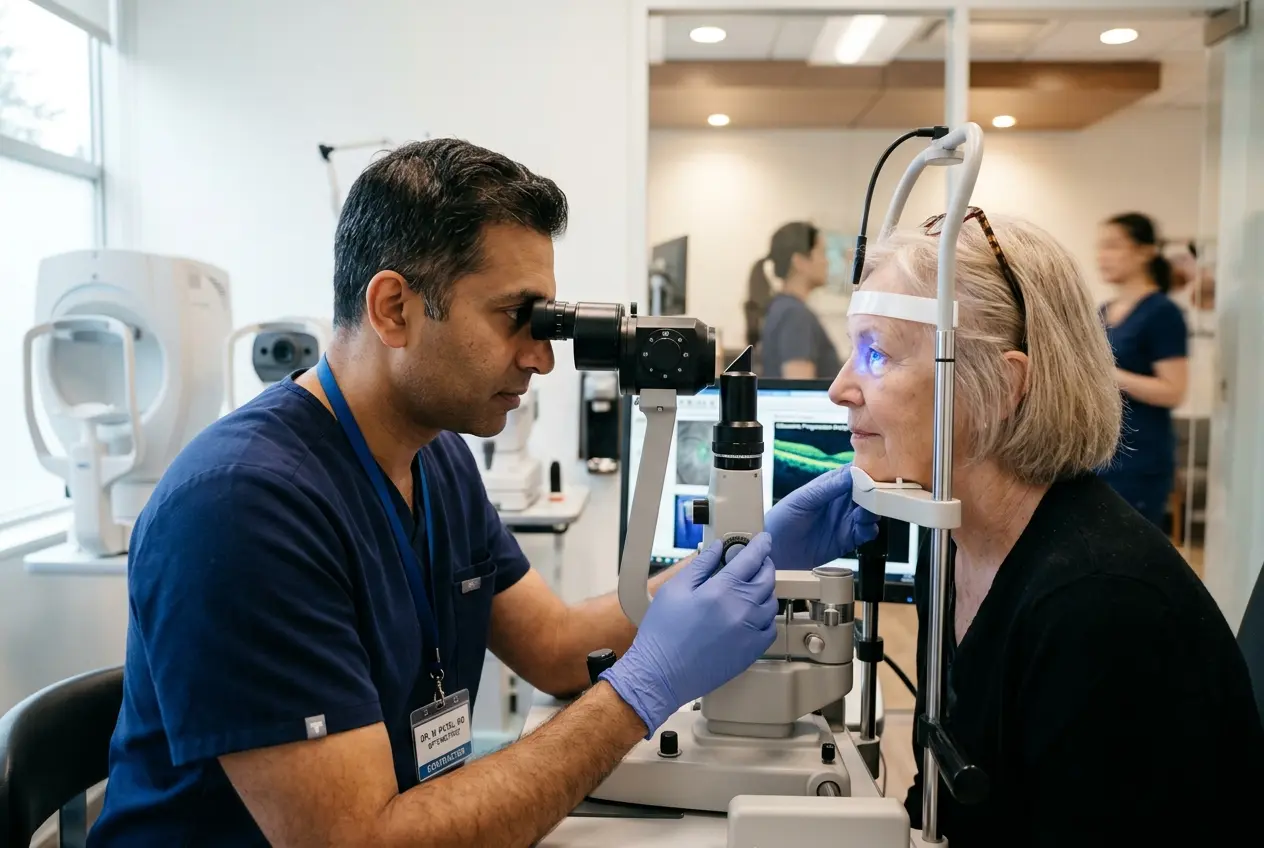
Glaucoma is a leading cause of blindness that often develops without symptoms. Our comprehensive approach helps Richmond residents preserve their vision through early detection and careful management.
We use advanced imaging technology to monitor optic nerve health, particularly important for patients with family history or African American heritage (both higher risk factors). Richmond's historic architecture means many patients navigate uneven sidewalks and staircases - maintaining peripheral vision is crucial for safety.
Treatment plans may include medicated drops, laser procedures, or coordinated care with specialists. We emphasize education so patients understand how to protect their vision long-term.
We use advanced imaging technology to monitor optic nerve health, particularly important for patients with family history or African American heritage (both higher risk factors). Richmond's historic architecture means many patients navigate uneven sidewalks and staircases - maintaining peripheral vision is crucial for safety.
Treatment plans may include medicated drops, laser procedures, or coordinated care with specialists. We emphasize education so patients understand how to protect their vision long-term.
Our Process
- 01 Step 1: Baseline evaluation of optic nerve and intraocular pressure
- 02 Step 2: Visual field testing to assess peripheral vision
- 03 Step 3: Corneal thickness measurement for accurate pressure readings
- 04 Step 4: Development of personalized monitoring and treatment plan
Benefits
- Early detection of vision loss
- Customized treatment approach
- Ongoing monitoring
- Preservation of quality of life
Frequently Asked Questions
How often should I be tested for glaucoma?
Annual screenings are recommended after age 40, or earlier if you have risk factors. African American patients should begin regular testing by age 30.
Is glaucoma treatment painful?
Most treatments are painless. Eye drops may cause brief stinging, and we'll teach you comfortable administration techniques.
Can glaucoma be cured?
While damage can't be reversed, early treatment can typically halt progression. Consistent monitoring is key to preserving vision.